


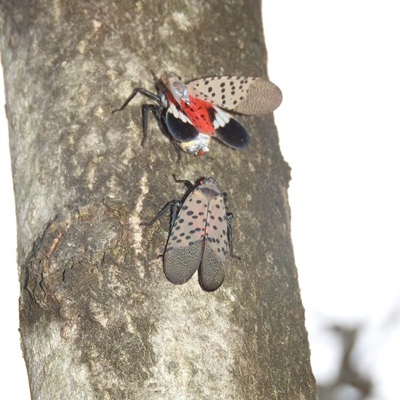
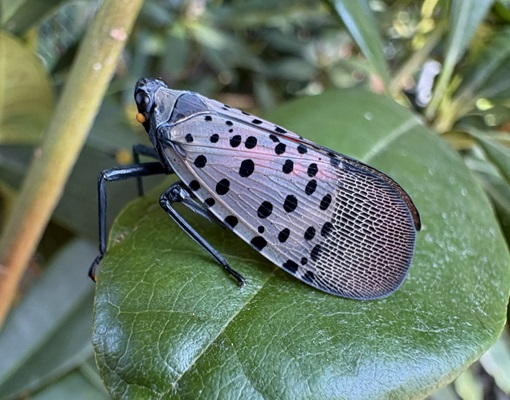
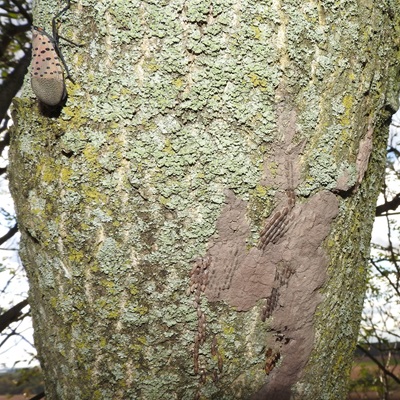
Adult spotted lanternflies are about one inch long and one half inch wide. They have tan forewings that have black spots. Their hindwings have lower red patches and upper black patches, separated with a white section in between. The red hindwings are mostly hidden unless the wings are spread. Adult SLF crawl, jump, or fly short distances. You will see adults from July to November.
Raffaela Nastri, CAES
Lawrence Barringer, Pennsylvania Department of Agriculture, Bugwood.org

Lawrence Barringer, PDA, Bugwood.org
Victoria Smith, CAES
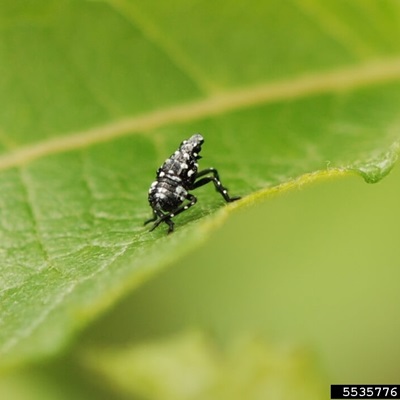
Spotted lanternfly eggs hatch in the spring and early summer. Early instar nymphs are black in color with white spots; fourth instars nymphs are red with black and white spots. You will see nymphs from April to October.
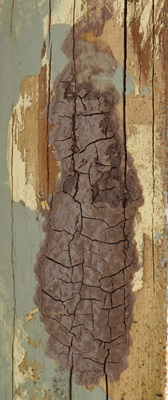
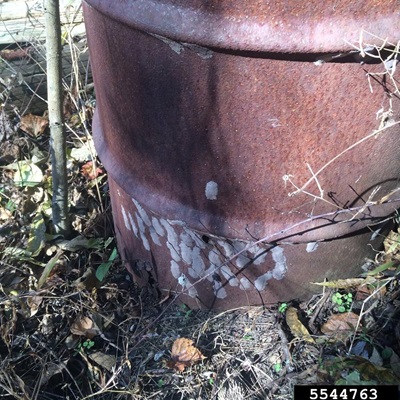
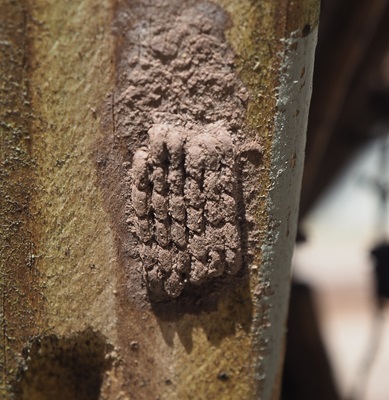
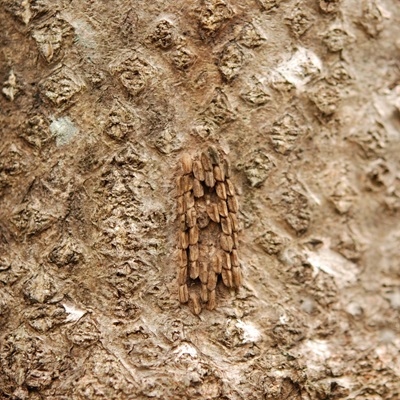
The spotted lanternfly eggs masses are laid on practically any surface including trees, stones, trash cans, side of a house, etc. during the fall. Egg masses are yellowish-brown in color, and most are covered with a gray, waxy coating prior to hatching (USDA, 2019). They may appear wet or sticky when fresh. You will see eggs from September to May.
Raffaela Nastri, CAES
Raffaela Nastri, CAES
Lawrence Barringer, PDA, Bugwood.org
Richard Gardner, Bugwood.org
Lawrence Barringer, PDA, Bugwood.org